
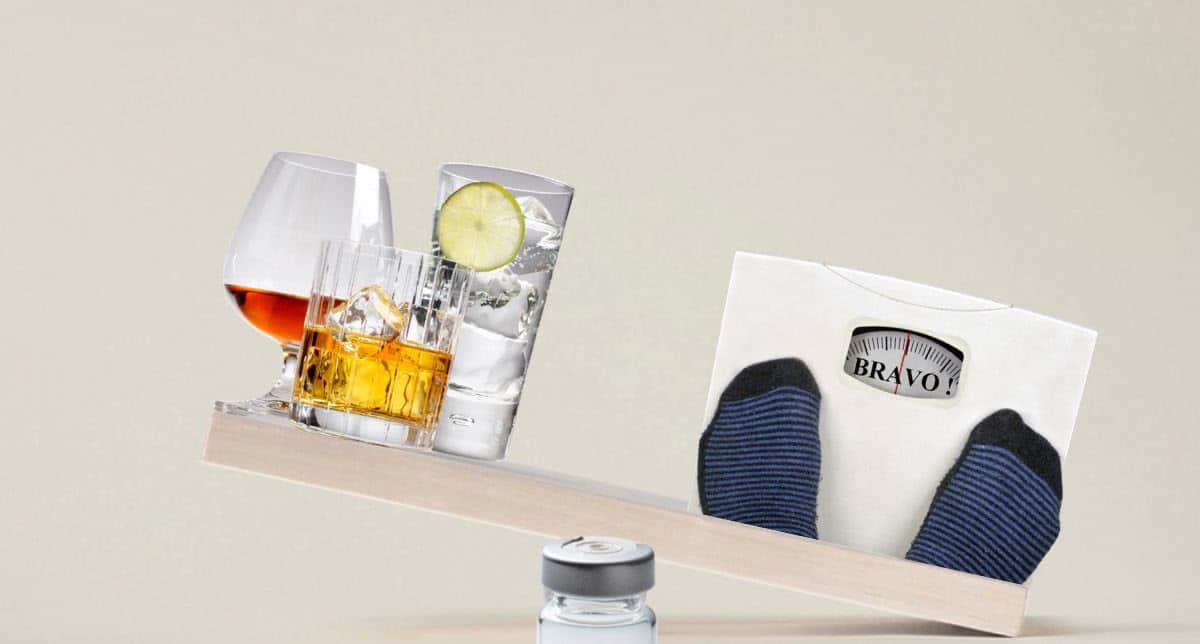
Something unexpected keeps showing up in weight-loss medication studies. People taking semaglutide aren’t just losing weight. They’re also drinking significantly less, often without even trying.
Researchers think they know why
These medications quiet down the brain’s reward system, which is the part that makes alcohol feel appealing in the first place. When that signal turns down, the urge to drink tends to fade with it. Clinical trials found that people on semaglutide drank less, had fewer cravings, and were less likely to binge drink compared to people who weren’t taking it. A review of more than 5 million patients found significantly fewer alcohol-related health problems in that same group.
It’s not an approved treatment for alcohol use yet, but it’s one of the more promising things to come out of this research in a while.
What we now know about alcohol and your health
This finding matters partly because it reframes how we think about drinking and health together. For years, the message was that moderate drinking was probably fine, maybe even good for your heart. Newer research tells a more complicated story.
Yes, light drinking may offer a small heart benefit. But that benefit is mostly cancelled out by a higher risk of certain cancers, including breast cancer and cancers of the mouth and throat. Heavy drinking (three or more drinks a day) raises the risk of heart disease, liver disease, and high blood pressure. One large study found that modest drinkers lived slightly longer on average than non-drinkers, but also had 2 to 4 times the risk of oral and throat cancers.
The honest takeaway is that there’s no amount of alcohol that’s completely risk-free. Less is better. And if you don’t drink, there’s no medical reason to start.
If cutting back has felt harder than you’d like
You’re not alone in that either. A few things that genuinely help:
- Track your drinks for one week just to see where you are
- Set a limit before you go out rather than in the moment
- Alternate with water when you can. Small shifts add up.
And if those strategies haven’t been enough, it’s worth bringing up at your next visit. There are real options available now, including medications that may help in ways that weren’t possible a few years ago. The conversation is a lot more comfortable than most people expect, and our team is here without judgment.
If you’d like to talk through your options privately, we’d love to see you.